

Working and practicing all that can be a tolling task. Just like physical workouts and skill practice, taking adequate rest is equally important. Resting helps in the recovery of the body and it prepares the athletes for the next challenges. Players are recommended to focus equally on resting as they do on skill; otherwise, they can get injured in the long run. Hence, it is highly suggested for players to create a balance between their work and resting durations. Only then can they achieve success in the long run. Elite players like Rohit Sharma, Suryakumar Yadav, Jasprit Bumrah, never skip their recovery sessions as they realise such sessions are equally important as skill.
In this article by ZAP Cricket, we will discuss methods by which players can recover better.
Recovery Methods for Cricketers
Deep tissue release
Deep tissue massages help release the stiffness in deeper tissues. The purpose of such massages is to relieve pain and stiffness, improve circulation and in restoring range of motion. All these factors combined help in enhancing performance.
Taking deep tissue massages helps open the nodes within muscles, thus avoiding all muscle related injuries. Deep tissue massage can be taken once every fifteen days, however, there is no fixed duration, any player can take it as per their body’s response. It is advisable to get one from a qualified personnel only as wrong massage can even aggravate pain.
Also Read: Cricket Injuries and how to prevent them
Contrast bath
Contrast baths are basically alternatives to hot and cold baths. It helps in improving blood circulation. Basically, the player has to take a hot bath for a certain time, say one minute, and then they have to take a cold bath for the same time duration. This completes one set and an individual can do 3–4 sets. It is important to start and end the contrast bath with hot water only.
Elite players take contrast baths after every practice session/match, specially when they do not have any other source of recovery. It is easy and affordable and is highly recommended too.
Pool session

Pool sessions is one of the most common method to reduce muscle soreness. Trainers and physiotherapists associated with teams prefer these metrics a lot. Basically, a player has to do light stretching, walking, etc. in a pool. It is one of the techniques of hydrotherapy, force of water helps in releasing the muscles. All the teams in IPL follow the protocols of pool sessions as they not only help in active recovery, but also are good for recreational activities.
Ice baths

Ice baths are when a player has to submerge in iced water for 3–4 minutes. It activates the body and reduces muscle tension. The temperature of water usually ranges between 10-15 degree Celsius. It also increases the blood flow. It is a very common practice and players are recommended to do it in supervision.
Body massage and Stretching Session
Body massage is a lighter version of deep tissue massage. It can be taken regularly as it helps release the muscles. Along with massages, stretching is one of the most basic methods to recover, yet it is least concentrated on. It is very important for players to stretch their body before and after the game, as stretching helps prepare muscles for the activity. It involves holding a muscle in a certain position for 30 seconds to one minute. Before the game, a player has to do dynamic stretching and after the game, they have to do static stretching. Stretching can be done in an active and passive manner as well. Active stretching is when a person is doing the stretches without any external help and passive stretching is doing the same task with external help like partner stretching, band stretching etc.
Foam rolling and Mobility

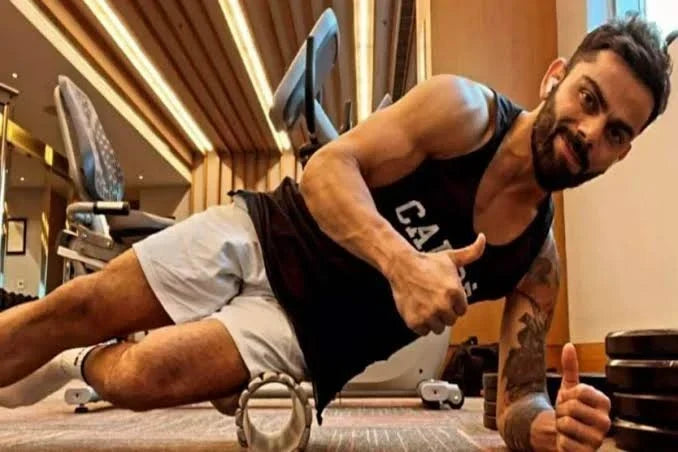
Foam rolling or rolling with a ball helps in removing nodes, thus increasing blood flow. It focuses on both major and minor muscles and can be done before or after practice sessions. Although players usually prefer to do it before a game or gym session as it activates the body.
Mobility exercises are done to mobile the body. These exercises help to reduce stiffness and activate your body for next session. As a player, you should have a fixed mobility program that should be developed after your screening tests. Few common and effective mobility exercises include: 90-90 hip mobility, abductor rock, thoracic rotation, world’s greatest stretch, etc.
Eating food that helps in recovery and have more electrolytes

One of the best and most essential ways to recover is through diet. High-protein meals with electrolytes like ORS, lime water, etc., help significantly in faster recovery. Not only that, eating simple, unprocessed food also aids in quicker healing. There is no substitute for eating clean, right food in adequate quantities to provide the body with the necessary nutrients. A balanced diet rich in vitamins, minerals, and hydration is key to ensuring the body repairs itself efficiently and maintains optimal health during the recovery process. High protein foods include: Egg, chicken, sprouts, sattu, cheese, besan chilla, etc. you can include these in your diet and see the results yourself! However, it is advised that you get a good diet plan as per your body requirements from a professional, as that will be targeted and will give quicker results.
Now that you have read about the necessary methods for recovery, here are some more articles you should read:
Right Mindset while batting | Importance of a good diet for cricketers | Gym Workouts and Exercises
Share:
Which is the Best Cricket Academy in India?
What are the Grains on a cricket bat?