

- by ZAP Cricket
Cricket leather balls: Complete guide
- by ZAP Cricket
In our previous blogs, we have thrown light on the batting side of the game by narrowing down best bats under various categories, like Best English Willow bats, Best tennis cricket bats, Best Dutch willow bats, etc. But today, in this blog by ZAP cricket, we will focus on the bowling side of the game by sharing valuable information on leather cricket balls. So that, bowlers can have access to right knowledge and can eventually work on their technique.

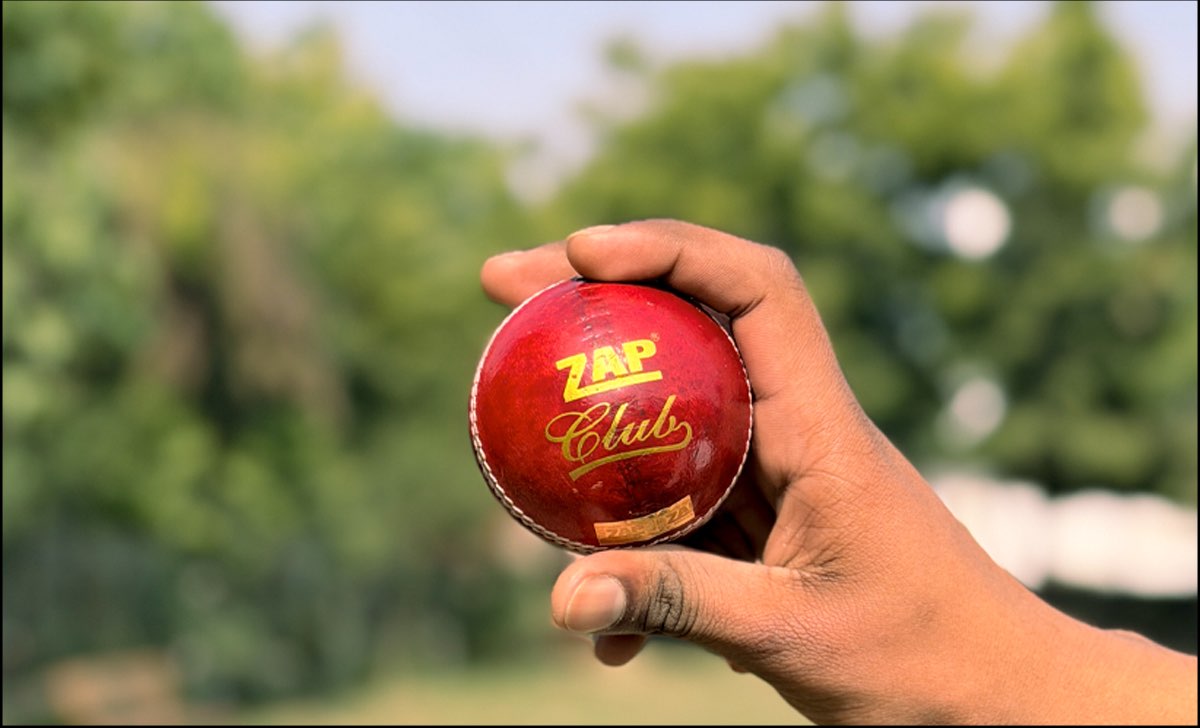
Leather balls are the balls that are made of material like leather, cork etc. and are used in professional cricket. These balls come in three variations, that is, red, white and pink and are changed as per the format of the game. Interestingly, all these balls are made of similar material but their properties change and all these balls have a tendency to behave differently. For better understanding, here is a grid that will help you understand better the difference between the three kinds of cricket leather ball:
|
Feature |
Red leather |
Pink leather |
White leather |
|
Format |
Test |
Day night test |
One day and T20 |
|
Swing and Spin |
Swings and spins well |
Moderate |
Only in initial overs |
|
Distance |
Decent distance covered |
Decent distance covered |
Goes extra distance |
|
Longevity |
Longest lasting |
Less durable than red ball but more durable than white ball |
Least durable |
|
Over life |
Roughly 80 overs |
Roughly 80 overs |
Roughly 50 overs |
|
Preferred playing under |
Daylight |
Daylight and floodlight |
Floodlight |
|
Leather finish |
Traditionally dyed leather |
Special pink dye with extra coating |
White dyed leather with protective coating |
Leather balls are used in elite cricket and that is a different ball game when it comes to tennis cricket. Both the balls have different nature and hence it’s important to understand their dynamics if you are someone who is switching from tennis cricket to professional cricket. We, at ZAP, understand your hindrances, and hence, we have got this guide that can help you distinguish between both the balls:
|
Feature |
Leather ball |
Tennis cricket ball |
|
Material |
Made with leather, cork |
Made with rubber |
|
Weight |
Heavier |
Lighter |
|
Construction |
Hand stitched |
Machine made |
|
Seam |
Prominent seam |
No seam |
|
Bounce |
Consistent bounce |
Higher bounce |
|
Speed |
Travels faster |
Travels slower |
|
Swing and spin |
High |
Low |
|
Playing surface |
Suitable for turf |
Suitable for concrete |
|
Injury risk |
High |
Low |
|
Usage |
Professional cricket |
Recreational cricket |
|
Skill required |
Yes |
No |
|
Cost |
Expensive |
Cheaper |
Match like experience: A high quality leather ball will give you a match like experience and hence when you’ll actually step on the ground to play a match, you’ll be much more confident and prepared. This will improve your average and strike rate, with least effort. Hence, if you want to prepare well and excel in important matches, it is mandatory to have your sessions in match like scenarios and having the right leather ball is part of that preparation.
Prevents bats from damage: A hard ball can break your bat and that can affect your confidence. Hence, to ensure longevity of your bat, you should always pick the right leather ball, one that is safe for your bat. A hard ball has the potential to break the toe or rip off the chip, but the right ball will increase the life of your bat!
Boosts confidence: Having the right leather ball will boost the confidence of both batsmen and the bowlers. For instance, if you are playing with a hard ball, the bowler won’t get the feel as the ball won’t swing much. Similarly, the batsman would find it difficult to score runs as the ball won’t travel the distance. And lastly, the fielder would be hesitant in catching as a hard ball could ruin their season with injuries. Hence, it is vital to have the right leather ball, so that the confidence is intact and players can play freely without any second thought in their mind!
Prevents injuries: Poorly made leather balls can cause injury like bruise, stitch or even a fracture. Hence, it is highly recommended to use a good quality leather ball so that you can stay away from injuries and focus on your game without any fear.

With this blog we tried to list the importance of good leather balls and ZAP’s leather balls can help you dominate the game. Now, you can pick the best ones as per your budget, skill level and obviously the format for which you are preparing. After all, choosing the right ball can significantly impact your career. Hence, choose smartly and keep working on your game!
Q: What is the price of a cricket leather ball?
The price varies as per the quality, it can be as low as INR 250 and can go up to several thousands.
Q: What is the difference between a two piece and a four piece leather ball?
A four piece leather ball is made with four leather pieces and two piece leather balls are made with two leather pieces.
Q: What is the size and weight of a leather ball?
As per ICC guidelines, the circumference of the ball is 22.4-22.9 cm and the weight ranges between 155.9-163g.
Q: What is the size of the leather ball used in women’s cricket?
As per ICC guidelines, the circumference of the ball is 21-22.5 cm and the weight ranges between 140-151g.
Q: Which cricket leather ball is used in International cricket?
In International cricket, Dukes, Kookaburra and SG balls are used.
Q: Can beginners practice with a leather cricket ball?
Yes, a beginner can practice with a leather ball.
Share:
ZAP Player Reserve English Willow bat: Handcrafted for Power hitters
Cricket Leather ball weight: Official standards for men’s and women’s cricket