

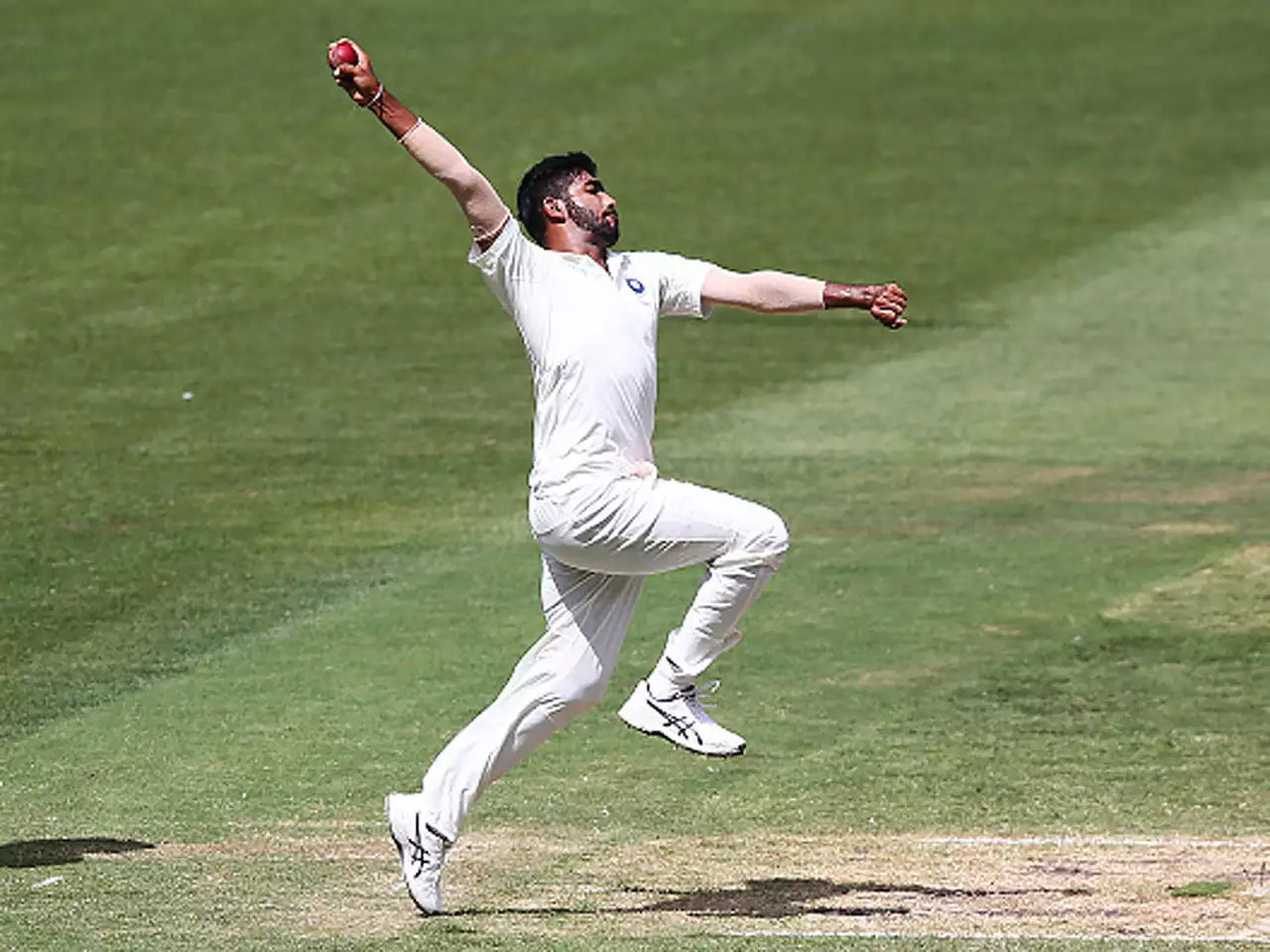
Bowling in cricket is a mix of a lot of mechanics and techniques. These include the run up, the action, the jump, the release and the follow through and a bowler needs to get everything on point to become super successful. And your cricket bowling action is one of the most important aspects. Atleast once in our lifetime, we all have tried to copy the style of our favourite bowlers. Be it Dale Steyn’s load up action, Shoaib Akhtar’s fierce and superfast style or James Anderson’s beautiful technique. But have you ever wondered why different bowlers have different techniques and how it affects your bowling style? While it could seem like replicating someone's delivery motion is as easy as watching a lot of videos and practising a lot, there are intangibles to every bowler that require careful consideration. Sometimes a specific bowler has physical advantages that completely separate their motion.
Last updated: October 6, 2026

In this chapter of learn with ZAP, let’s learn about the different cricket bowling actions and techniques and how you can develop a good one for yourself.
Cricket bowling action, in simple terms, are the set of motions that you do before delivering the ball to the batsmen. A good motion can help you generate the pace, the swing or the spin that you need to dismiss the batsmen. This motion should be in sync with what you want to achieve as a bowler. For example, Shane Warne’s technique depends upon extracting massive turns from the tracks. And he developed his style based upon that. But, at the same time, a bad action can lead to injuries, and also make it difficult for bowlers to deliver balls accurately.
Many people asks “bowling kaise kare (How to bowl perfectly)”. Its simple, any bowling technique comprises of the following parts. The grip, the run up, the delivery stride or jump, action release and follow through.
The Grip is the way a bowler holds the leather ball, and both the spinners and fast bowlers have different grips.
The run up helps you gain momentum for adding pace to your deliveries. Spinners depend more upon the turn and bounce, so they don’t go for a longer run up for speed. While for fast bowlers, long and efficient run up can really add to their prowess.
The jump or the delivery stride right before reaching the crease is where you convert your potential energy from the momentum to kinetic energy while releasing the ball.
The final phase of the run up involves the motion of the hands or the action. The motion of your hands puts you in a position to deliver the ball. And the final part, the release point and the follow through. The release is when the bowler lets go of the ball and the follow through is how you continue your action and give it a smooth end, rather than just stopping.

Credit: Wikimedia Images
Increasing pace in your deliveries involves refining the all above elements of the action and optimizing body mechanics. Focus on a strong front arm, efficient follow-through, and utilization of the core muscles to generate additional pace. These elements, combined together, can add extra zap to your deliveries.
The release is the point at which the bowler lets go of the ball. Your release depends on what grip you’ve chosen before the run up. As a spinner, if you have taken up a googly’s grip, you need to set your release so that you bowl the perfect googly. At the same time as a pacer, if you’re going for a knuckleball variation, then the release should be suited to deceive the batsmen. The release point also depends upon the type of delivery. If you're going for a bouncer, the release will be a tad bit late than when you bowl a bouncer.
Different bowlers have different styles, the one that suits them the most. These various styles can be classified as the following:
A side-on action uses a more lateral alignment through the delivery stride, with the shoulders and hips turning through release. Some successful swing and seam bowlers have used side-on actions, but the alignment itself does not guarantee outswing, seam movement or extra pace. Matthew Hoggard, Brett Lee, and Glenn McGrath are three examples of side-on approach.

Credit: Sport360
A front-on action has the chest and hips more open towards the batter through the delivery stride. It can be a natural and effective action for many bowlers, but it does not automatically create better accuracy than a side-on action. Makhaya Ntini of South Africa, Steve Harmison and Andrew Flintoff from England had such an open chest approach.

Credit: Sport360
A round-arm action uses a lower arm path and release angle than a classical high-arm action, but it is still an overarm bowling action rather than an underarm delivery. Bowlers can use different arm slots legally as long as the action complies with the Laws and ICC regulations. The lower angle can change trajectory and release geometry, but it does not automatically mean minimal bounce. Kedar Jadhav was India’s trump card in ODIs to get wicket, because he used his round arm style and picked up some crucial wickets.

Credit: Circle of Cricket
Here are Bowling Actions to Study and use for your style:

Credit: Sportsandarchitectureblog
You may have tried Binga’s action at least once while playing cricket. If you did, you were copying one of ZAP Cricket's favourite fast-bowling actions to watch. Lee's rhythm, run-up and explosive delivery stride made his action iconic, but no single action is "perfect" for every bowler. Brett had one of the most rhythmic run ups with a proper cyclic movement of feet. His jump was a combination of a high jump and a forward jump that gave him the extra burst of pace and bounce. With high non bowling arm falling down, he drove his bowling arm quickly towards the batsmen that gave him lightning speed. This resulted in him having an average delivery speed of about 150 kmph.

Credit: Sportstar - The Hindu
Dale Steyn is one of the most lethal fast bowlers of all time. He has a seamless run up that ensure there’s no breakage of momentum. His simple and traditional load up action combined with the his dynamic approach to the crease and seamless transfer of energy into the delivery stride allowed him to consistently trouble batsmen.
The Pakistani bowler, at a very young age has shown superb technical qualities for a fast bowler. His fast arm speed and quick release make him a bowler to watch out for in the future.

Shoaib Akhtar, also nicknamed as the Rawalpindi Express is the bowler who delivered the fastest ball in cricket history. His unique sling arm style and the explosive follow through is what gave him his raw pace.

Credit: Rediff
The left armer, Zaheer Khan can be considered to be one of India’s best ever fast bowlers. He had a smooth run up, and a traditional load up technique combined with his ability to swing the ball in both directions with his wrist made him so successful.

Credit: ICC
Mitchell Starc is one of the tallest bowlers in the world and he does use it to his advantage to the fullest. He has a smooth run up and a high arm action that helps him get the raw bounce, pace and a late reverse swing, making him one of the best bowlers in all formats.

Credit: The Guardian
Jofra Archer is one of the most exciting young talents. He has a simple style, but still can generate extreme pace. This comes from the way he hits his front foot on the ground after during his final stride and use all of his body to generate pace. Though this has worked for him, it is not the most efficient. He has been plagued with injuries all along his career.

Credit: Hindustan Times
A magician with the ball, Wasim Akram was a master at swinging the ball. His wrist position, seam orientation, and variations in pace revolutionized swing bowling.

Credit: Twitter
Kapil Dev had a tall, lanky build and a fluid, rhythmic motion. His long run-up gave him speed, and his high arm delivery and solid wrist position gave him swing. He had even mastered the skill of delivering the yorker.
Irfan Pathan's style combined seam movement with the ability to swing the ball. His front on approach and wrist position allowed him to extract both conventional and reverse swing.

Credit: Sportskeeda
Every gully cricketer’s favourite style, Lasith Malinga’s action is what all of us have imitated. He had a proper sling shot style that helped him nail those yorkers. His ability to bowl slower balls and yorkers made him a death over specialist in ODIs and T20s.
Although unconventional, Jasprit Bumrah's action has been super successful. His sling arm motion and an unorthodox action tricks the batsman and has been one of the major the reasons for his success.

Credit: The Hans India
Sunil Narine has been one of the best spin bowlers of the modern generation. His action was reported and reassessed during his career, and he made technical changes before returning under the relevant regulations. A reported or unusual-looking action should not be described simply by whether the arm "looks bent"; the ICC standard is based on measured elbow extension.

Credit: ESPN Cricinfo
The bowler with the most wickets in cricket history, Muralitharan had to go through a lot of scrutiny because his delivery style. Muttiah Muralitharan's action was heavily scrutinised because his arm could appear bent to the naked eye. Biomechanical testing showed why visual appearance alone can be misleading: congenital elbow characteristics and hyperextension are not the same thing as illegal elbow extension. His career became one of the major reference points in the evolution of bowling-action testing.
Like Lasith Malinga, Matheesha Pathirana bowls in a unique low and slinging motion. The style helped Malinga nail down yorkers with pinpoint accuracy, and Pathirana has demonstrated a similar level of accuracy thus far in his young career.
Naseem Shah's technique, despite his young age, displays maturity and promise. His natural, whippy, high-arm approach and smooth release, that generated easy pace hold great potential for the future.
Shivam Mavi is a young and upcoming fast bowlers who has shown unbelievable potential. His style showcases dynamic energy and potential. His ability to generate bounce and movement is his trademark at such a young age.

Credit: SportsAdda
Mark wood and contemporary pacing go hand in hand. His super fast run up, high and explosive jump and the high arm style helps him bowl north of 150 kmph consistently. His style has the true essence of fast, lethal test match bowling.
| Question | What matters |
| Side-on, front-on or round-arm? | These describe style and alignment. None is automatically legal, illegal, faster or more accurate. |
| Can the elbow look bent? | Yes. Visual bend alone does not determine legality. |
| What does the ICC measure? | Elbow extension from the arm reaching horizontal until ball release. |
| What is the permitted limit? | Up to 15 degrees of elbow extension. More than 15 degrees is an illegal action under ICC regulations. |
| What happens after a report? | The bowler can be assessed at an ICC-accredited testing centre and may need remedial work before reassessment. |
Legal-action definition checked against the ICC Illegal Bowling Actions regulations.
A lot of young bowlers, when they come to a cricket academy suffer with one problem and that is chucking. Though they are able to generate immense pace through their action, but the way they do it is not valid. In cricket, "chucking" is the common term used for an illegal throwing action. Under ICC regulations, an action is illegal when the bowler's elbow extension exceeds 15 degrees from the point the bowling arm reaches horizontal until the ball is released. This is not the same thing as simply seeing a bent elbow. Natural elbow flexion or hyperextension can look unusual while still being legal, and suspected actions are assessed using the ICC's testing process.

Credit: The Express Tribune
International cricket players Harbhajan Singh, Muthiah Muralitharan, Sunil Narine and Pakistan fast bowler Shoaib Akhtar have all been accused of throwing the ball.
Q - What are some exercises to increase speed and pace in bowling?
Increasing speed requires a combination of strength training, agility drills, and technique refinement. Plyometrics and resistance exercises are particularly helpful.
Q - Are there any penalties for bowlers with illegal actions?
Yes, players with illegal actions may face suspensions and corrective measures.
Q - Can a bowler change their bowling action over time?
Yes, bowlers often make changes to the motion of their hands to improve performance or recover from injuries.
Share:
Which bowler has the most wickets in cricket history in all formats?
Wicket Keeping in Cricket: An Expert Tips and Techniques Guide
1 comment
It’s a very excit.ent for me to know my bowling action analysis and increase my speed