

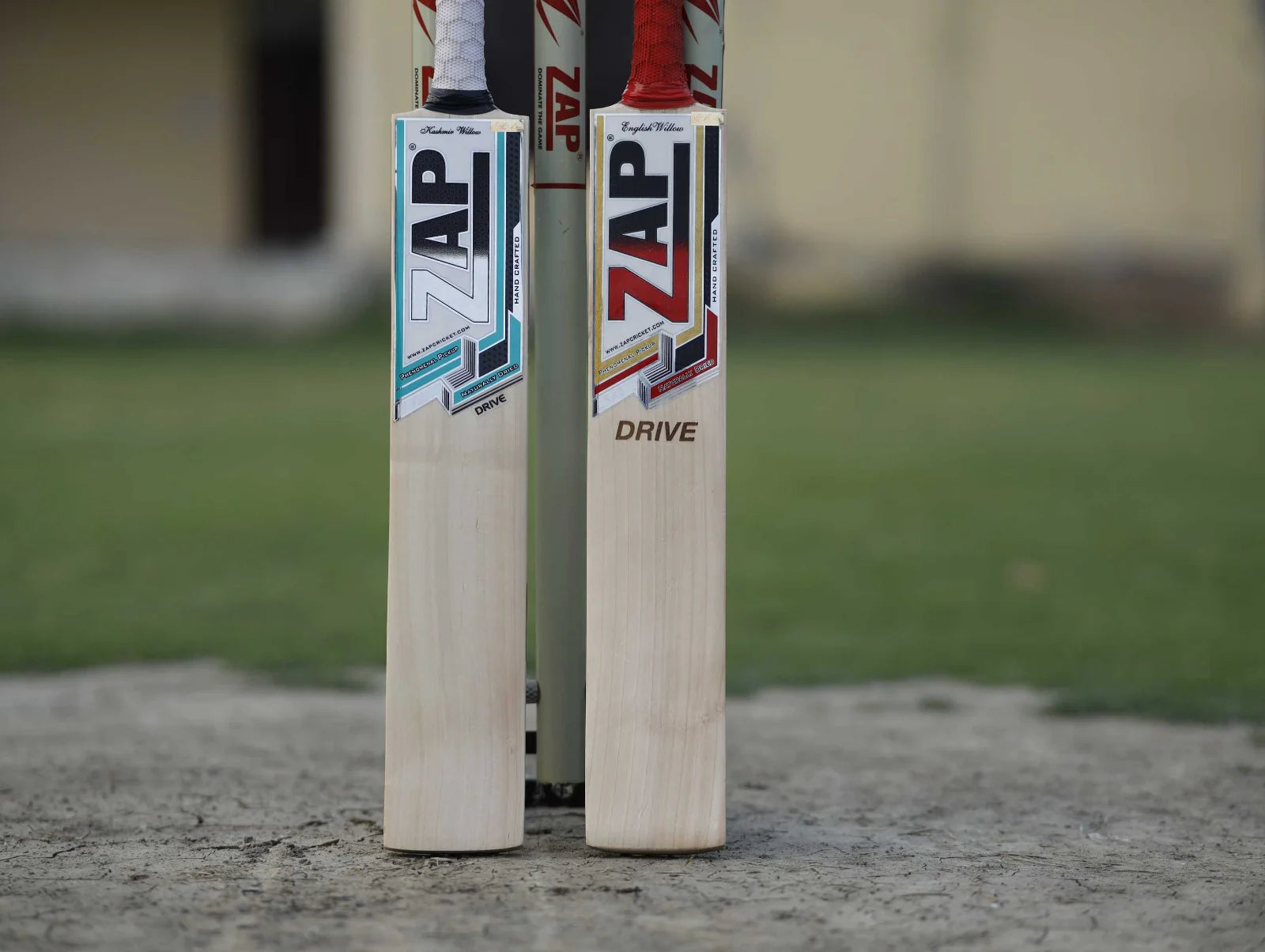
Buying a cricket bat is a special feeling for any cricket player. But at the same time, it is important to understand what cricket bat you are choosing and how to little thing about a bat affects its performance. One major spec of a bat are the grains of a cricket bat. A lot of people don’t know what it means, or what is the purpose of the grains on a bat.
Last updated: October 7, 2026

So, in this article by ZAP, let’s understand the meaning of cricket bat grains, the ideal number of grains on a cricket bat and how they affect a bat’s performance.
Cricket bat grains are the visible growth-ring lines seen on the face of willow. They are useful when visually assessing a cleft, but grain count is not a direct performance score. A bat with more grains is not automatically better, and a bat with fewer grains is not automatically more durable.
| Grains can help you assess | Grains cannot guarantee |
| Growth-ring pattern and visual character of the cleft | How much ping the finished bat will have |
| How straight or evenly spaced the visible growth lines appear | How long the bat will last |
| Part of the cosmetic grading picture | The bat's pickup, balance or sweet-spot performance |
| Possible differences in growth rate between clefts | That 8, 10, 12 or any other number is automatically "professional grade" |
No single grain count is ideal for every player or every bat. You will see excellent bats with relatively few grains and excellent bats with many grains. At ZAP, we would never choose a bat only because it has a particular number of lines on the face.
For actual performance, the whole bat matters: willow quality, density, moisture, pressing, profile, spine, edges, toe, weight distribution, pickup, preparation and the quality of the finished craftsmanship.
Straight, clean and evenly presented grains are visually desirable and are often associated with higher cosmetic grades. However, angled or slightly wavy grains do not automatically make a bat poor-performing. Willow is a natural material, and two visually different clefts can both produce excellent bats.

Not all cricket bats are created equal, and the type of willow used can make a significant difference. The two main types of willow used in cricket bats are English Willow and Kashmir Willow.
Also Read: English Willow vs Kashmir Willow Cricket Bats
While the number of grains on a cricket bat can indicate its quality very well, player’s should understand the difference between grain count and willow grade when selecting a cricket bat. Willow grade refers to the quality of the willow itself, not the number of grains. Higher-grade willow is typically used in professional bats and offers better performance and aesthetics. A Grade 1 English Willow bat, like the ZAP Royal Crown, may have anywhere from 8 to 12 grains that are straight and evenly spaced, indicating a premium-quality bat.
Conversely, a lower-grade bat may have uneven or irregular grains and still perform well but might not have the same durability or aesthetic appeal. Understanding the difference between grain count and willow grade can help players make a more informed decision when choosing a bat.
When choosing your next cricket bat, remember that the number of grains is just one of the many factors to consider. It’s also essential to look at the overall quality of the willow, the bat’s balance, weight, and how it feels in your hands.
Now that you have read and learnt about the Grains of a cricket bat, here are some more article we recommend you read:
How to knock a cricket bat | Cricket Bat Care Guide | How to oil a cricket bat
Share:
Essential Recovery Methods for Cricketers | Boost Performance
The Role of a Cricket Coach: How Coaching Can Improve Your Game