

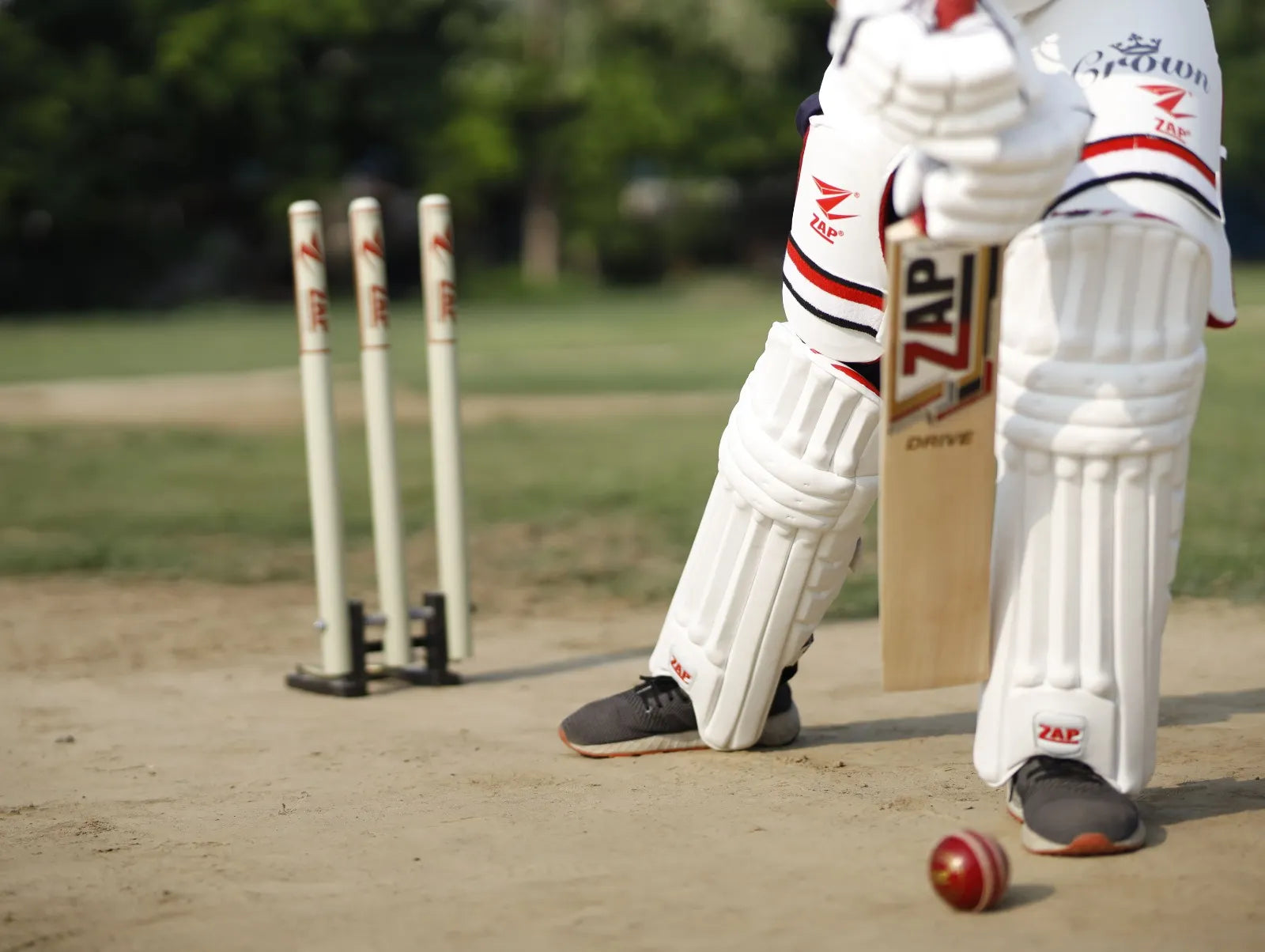
The most important skill a batsman can have is a smooth and silky batting footwork. How you use your feet while batting on the pitch affects how good your performance will be. It is one of the most important aspects of your cricket batting technique. Good footwork gives you a better chance of getting into strong positions against pace, swing, seam and spin, but it works together with balance, judgement, timing and shot selection. So, in this chapter of Learn with ZAP, let’s learn how to improve your batting footwork in cricket by learning some drills and becoming the best version of yourself.
Last updated: October 6, 2026

Cricket batting footwork is the foundation on which you build your innings and set the tone for your performance at the crease. It refers to the movement of your feet while facing the bowlers. Footwork involves a proper, precise movement and coordination of your feet. Having the right foot positioning is vital when dealing with a bowler's movement. Smooth footwork helps you quickly get into the correct positions, giving you the confidence to play different shots with ease and elegance. By mastering your footwork, you can handle the bowler's deliveries more effectively, making your batting look effortless and stylish. To build a stylish innings, you also need cricket bat that helps your dominate every bowler. Look for a bat that is comfortable and lightweight, without compromising on the performance. Read our Kashmir Willow vs English Willow Guide to know better.
A good footwork is the base of a solid innings and is the fundamental aspect that will enable you to adapt to different playing conditions. Just the way you would take a deeper batting stance on a less bouncy pitch, you would also want to have a different way of reaching the balls on different cricket pitches and against different types of bowler, like swing and spin. Here are what an effective and functional footwork help you with:
With better footwork, your ability to reach and react to deliveries gets better. For example, if a bowler bowls a surprise bouncer, your feet will act instinctively and shift the weight onto the backfoot to play a pull or a hook. When the bowler bowls at an awkward spot, neither too short nor too full, you might be unsure whether to drive the ball or just punch it. But having a good feet position can help hide your weaknesses and give you an advantage in such situations. With proper footwork, you can handle these deliveries effectively and emerge successful in your shots.

Credit: ESPN Cricinfo
Dealing with swing and spin needs a really good, quick and reactive footwork. You need to cover the outswinging deliveries by taking your legs to the balls while you need to react quickly to inswing deliveries coming right at your pads. When facing spin, you'll often need to take longer strides to reach the ball's bounce. And if the bowler makes a mistake and delivers a short ball, you'll have to quickly get onto the backfoot.
The weight of your entire body rests on your lower body and it has the job to provide balance and transfer weight according to the shot that you’re going to play. So if you’re playing a cover drive, in which you’re required to take a stride towards the ball, your body weight should also be transferred onto the front foot. A batsman can retain balance and power when playing offensive strokes by using proper footwork to ensure that weight is distributed correctly during a strike.
A lousy, slow footwork can dwindle with the amount of control you’re batting with, whereas if you’re sharp and use your legs well, you can have a good hold of the kind of shots you are going to play. Just look at the King, Virat Kohli himself, the way his lower body dances while playing strokes gives him unprecedented control over his shotmaking. Along with control, the way your legs work even affects the timing of your strokes. Sharp leg movement gives you ample time to judge the line and length of the ball, leading to better timing and shot selection.
Having a silky smooth footwork instills a sense of confidence in every player, boosting their mental strength to face any bowler or challenging situation. So, it is important to master this batting technique and play like you own the pitch.

Credit: ESPN Cricinfo
The batting stance is the position you’re standing in just before taking on a delivery. It is the first step in having good batting technique and footwork. There are various types of positions that you can choose to stand in before facing a delivery. Adopt a position that you’re comfortable in and which suits your batting styles.

Credit: Cricketers Hub
A trigger movement is when you initiate a shift in your weight and balance on either of your legs as the bowler starts with his run up. This slight forward-and-backward motion helps you stay balanced and triggers your body to be ready for the incoming delivery. Remember, the trigger movement should be minimal, avoiding any unnecessary body sway.
As the bowler releases the ball, pay attention to their hand. Observing early clues from their wrist movement, seam alignment, and hand posture will help you determine the type of delivery that will be coming your way. You can respond quickly and make split-second decisions if you start doing this well. Wear a helmet that provides a solid protection and also doesn't interfere with your vision.

Credit: Hindustan Times
To effectively handle full and deliveries bowled higher up the pitch, you need to move on the frontfoot and play your shot. A good cover drive and a perfect straight drive requires accurate technique with your legs, so that there’s a proper shift in weight and balance. You need to train your lower body well so that you never miss a half volley and punish the bowler at every mistake.

Credit: ESPN Cricinfo
Backfoot shots like the pull shot, square cut involves a quick transfer of your weight onto the backfoot. A slight delay in judgement and response to a short pitched delivery could cost you your wicket.

Credit: Sportskeeda
Sometimes, if the ball is not close enough to go onto your forward leg, you just need to get close by stepping out of the crease. This requires full commitment and proper coordination between both your legs so that you’re confident when you do it.
Dealing with spinners requires a different approach than pacers. Stay light on your feet and use small, nimble footwork to adjust to the spinning ball. Playing on the front foot or back foot depending on the length of the delivery is crucial. Use the depth of the crease to your advantage.

Not every ball merits a shot. The ability to leave deliveries outside the off-stump requires discipline and judgment. Maintain a solid stance and keep your bat close to your body. Train yourself to let the ball go when it's not in your hitting zone, preventing unnecessary risks.
| Situation | Footwork idea | Main objective |
| Fuller ball | Move forward into a stable position | Get close enough to control the drive or defence |
| Short ball | Move back and across where needed | Create room and stay balanced for back-foot shots |
| Against spin | Use the crease, move forward when committed, go back when length allows | Avoid getting stuck at one distance from the ball |
| Leaving outside off | Small, controlled movement with a still head | Stay balanced while letting the ball pass |
| Coming down the pitch | Quick, decisive steps without losing head position | Reach the pitch of the ball or create a safe hitting position |


Having good batting footwork on a cricket pitch will surely help you take your game to the next level. Firstly it’ll be a boost to your confidence. Secondly, your style will be very pleasing to watch for everyone. And lastly, you’ll make batting super easy for you and it will help you dominate the game.
So continue developing this technique and become the best version of yourself.
Share:
Rohit Paudel: Nepal Cricket Star, Batter & Former ODI Captain
Most Sixes in Cricket History Across all Formats: The Biggest Hitters