

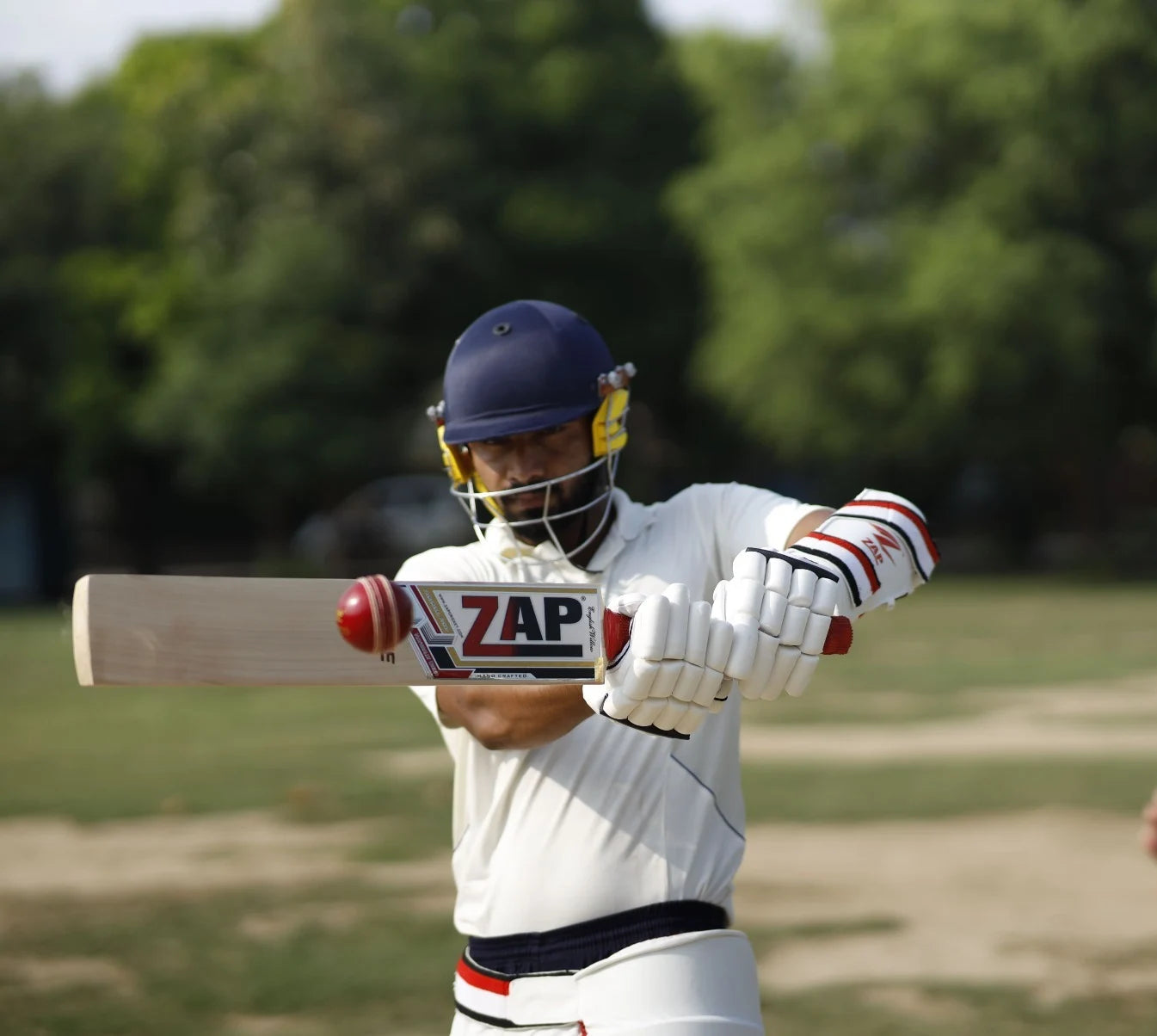
Imagine this: you are locked in a fiery battle with a fast bowler. The bowler has the ultimate weapon that can put you in trouble - the bouncer. He bowls it like a cannon, aimed to give you the scent of the leather ball. But you are prepared, and confident, to unleash the perfect counter. You play a stroke, and the crack of the bat and the ball is a thunderclap. The ball transforms into a tracer bullet and races to the boundary on the leg side. This counterattacking stroke is one of a batter's main attacking answers to short-pitched bowling, but it is not the only answer. Depending on line, height and match situation, a batter can also sway, duck, defend or leave the ball.
Last updated: October 6, 2026

In this chapter of Learn with ZAP, let’s get deep and learn how to play the Pull Shot in Cricket well.
Bouncers and short pitched deliveries are a common strategies in the modern game to test and put the batsmen in trouble. Bowlers often use it in the powerplay as a surprise, in the death overs in limited overs games to stop batsmen from scoring runs, or as a short ball tactic in the test format. But there’s one player who has mastered countering this tactic and even made it his favourite shot. It is Rohit Sharma’s pull shot, his trademark. The pull is a raw display of power and aggression. The pull is usually played to a short-pitched ball around waist-to-chest height, often from around the body line or just outside it, and is directed into leg-side fielding areas. To play the pull cricket shot well, you must accurately judge the line and length of the ball, have quick footwork and transfer of weight and have a good follow through after the stroke.

Credit: Cricket World
The essentials of a good batting technique, the right grip, correct footwork, the transfer of weight and your timing are the pillars on what a successful execution of the pull shot sits upon. Improving these aspects together gives you a better chance of playing the stroke with control.
So, let’s learn how to play the pull shot in cricket perfectly:

Credit: Sportskeeda

Credit: Hindustan Times
| Element | Pull shot | Hook shot |
| Typical ball | Short ball around waist to chest height | Higher short ball, often around chest to head height |
| Common scoring area | Mid-wicket to square leg | Square leg to fine leg, often more aerial |
| Control | Can be rolled along the ground or hit aerially | Usually carries more aerial risk |
| Alternative | If the ball is too high or not in a controllable zone, ducking, swaying or leaving can be the smarter option | |
While playing the shot, you can make a ton of basic mistakes that you need to learn how to avoid.

Credit: ePHOTOzine
All these can all lead to you playing a bad stroke and cost you your wicket. Have mental clarity to play each ball one at a time, be aware of the fielding set up by the bowling side and the bowler’s trap to prevent any such error.

As the formats of the game get shorter and shorter, batsmen are not scared to take risks and score runs. So, however well the bowler bowls, batsmen will always try to hit the ball out of the ground. And as bowlers use bouncers and short pitched deliveries in order to contain runs and pick wickets, the pull shot will be a powerful reply.
The pull shot in cricket embodies the fusion of power, skill, and calculated aggression. In the modern game, it has become one of the most important weapons in a batsman’s arsenal. The right technique, timing, and shot selection, can help you harness the full potential of this stroke. And NEVER FORGET- PRACTICE MAKES PERFECT, so continue working and some day you’ll be a maestro too.
Share:
Kumar Sangakkara: The Left Handed Maestro
Which bowler has the most wickets in cricket history in all formats?