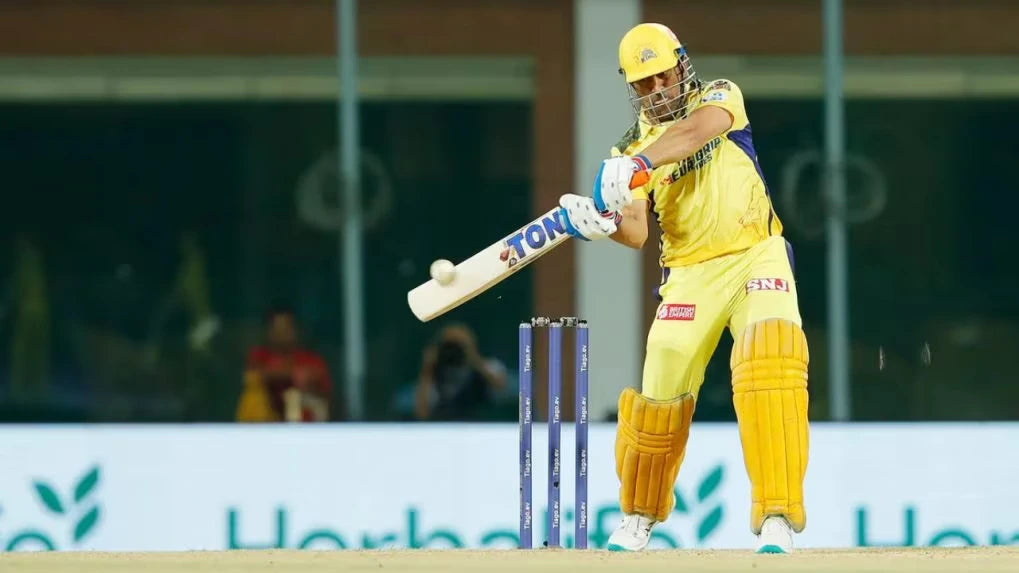
Do you ever feel intrigued by watching players like Chris Gayle and MS Dhoni effortlessly flick the ball and send it soaring for a huge six?
Last updated: October 6, 2026
Even bowlers fear their strength, knowing that if they can just flick the ball for six, they are capable of muscling it even farther. The ball disappears from sight, with no chance of it remaining on the ground, always traveling to the stands. As Akash Chopra often says, "Darshak bane fielder aur fielder bane Darshak”. What's even more exciting is that these players can hit sixes at will, accelerating the scoring rate whenever they feel it's necessary. Fans are always eager to see these batsmen hit big sixes, knowing it's only a matter of time before they change the course of the match.
Credit: Cricket Australia
Power hitting in cricket is an art, and with the rise of the t20 format, it has become more and more important for batsmen to become a maestro. But, there is one thing to consider, power hitting is not always about muscling the red leather with brute strength, it is about being efficient and using a combination of timing and strength, both for big sixes or to drive it along the ground like a tracer bullet.
But before understanding about power hitting in cricket, let’s first dive and study the Cricket Batting Tips & Techniques For Beginners by ZAP, which is considered the best guide for beginners.
To, excel at power hitting, you’ll first need to understand the physics of a cricket bat:
The Weight: Heavy vs. Light
When playing cricket, everyone wants to strike the ball with great force and velocity. This is where the question arises, should they use a bat that is light or heavy in weight?
- A lighter bat can often be accelerated more easily, while a heavier bat can carry more momentum if the player can still swing it efficiently.
- There is no universal percentage advantage that applies to every player. Bat speed depends on strength, technique, bat pickup, balance and the individual swing.
- The best choice is a bat that allows you to control the downswing, reach the ball on time and still transfer enough energy through contact.
- For power hitting, pickup and balance matter just as much as the number printed on the weighing scale.
The Sweet Spot:
Ever wondered why the shots you play from the middle of the bat travel further than when you play from anywhere else?
There are multiple reasons for this:
- The sweet spot is the area where contact generally feels cleanest and produces less unwanted vibration in the hands.
- Its exact position changes with the bat profile, blade thickness and weight distribution.
- A well-timed strike near this area can transfer energy more efficiently than a badly mistimed hit near the toe or edge.
- That is why timing, bat speed and contact point work together. A heavier bat alone does not automatically create a bigger shot.
- Bat preparation also matters. A properly prepared cricket bat is better placed to handle repeated ball impact.
Ball speed after the impact:
This might be a very nerdy part of this article, but understanding this is very important in better understanding power hitting in cricket.
So, what causes a ball that is bowled at the batsman at a certain speed to change direction and travel at an even greater speed and now what does this impact speed depend upon?
It’s the bat striking the ball and the speed depends on where you play the shot from (could be the edges, the sweet spot or the bottom), your timing and the swing speed.
- If the shot is played off the sweetspot, and is perfectly timed, the ball will be returned at a much much greater speed. It will be like the red leather sphere is traveling toward the boundaries at lightning speed.
- But if the shot is mistimed, or edges, the shot won't have much power and the speed of the ball after the impact won’t be much higher than what it already was when it was bowled.
- From a physics point of view, rebound speed changes with bat speed, ball speed, timing and the point of contact on the blade. Off-centre contact generally produces more vibration and a less efficient result.
So now, if you have understood the physics and how playing different shots impacts the speed the leather sphere blasts off from the face of the crafted willow, you’re only a few steps away from learning and being a master at power hitting in cricket. Let’s look at the steps you should remember when hitting big sixes in cricket:
Power-hitting principles at a glance
| Principle |
Why it matters |
| Pick the right length |
The best power option changes with where the ball pitches |
| Stable base |
Helps transfer force while keeping control through the shot |
| Bat speed |
Creates power when combined with clean contact |
| Sweet-spot contact |
Reduces wasted vibration and improves the quality of the strike |
| Use the bowler's pace |
Ramps, scoops and deflections can score quickly without a full power swing |
| Strength and mobility |
Support repeatable hitting positions and control through the range of motion |
Always pick the right length to hit big:
Credit: DNA India
- As said in the earlier parts of this guide, power hitting in cricket is not just about swinging the bat hard, it is about being effective and using both, your strength, the strength of the willow and the bowler’s pace and timing it sweetly with enough power that it travels towards the boundary.
- So, it is necessary for you to judge where the delivery is bowled and accordingly play your slog shots.
-
So, if the bowler goes short length, play a pull shot and hit him over mid wicket or long leg for a six. If he goes full, go straight down the ground, similarly, if he bowls short outside off, play the square cut shot over covers and point, just like Sachin Tendulkar did against Shoaib Akhtar in the 2003 ODI World Cup.
- Practice drills, improve your shot making decisions and your reflexes to even hit bowlers who bowl at 150 kmph for massive sixes.
Innovation is the key to success:
Credit: ESPN Cricinfo
- Imagine a player picking up a wide yorker outside off stump and hits it over long on. How crazy does that sound?
- That’s what we see players like Suryakumar Yadav, AB de Villiers do, they play shots that are just imaginable. They position themselves in such a way that they can hit any ball in any part of the ground.
- The T20 era is the era of innovation and it’s about getting the best results while doing the least.
- So, using the bowler’s pace against themselves is the best thing that you can do as a batsman to achieve unbelievable results in the T20 format.
- Playing innovative shots, like the scoop shot, the reverse sweep, the Paddle shot, the ramp shot all make use of the bowler’s pace to score at a high strike rate and all of these are important parts about Power hitting in cricket.
Work For Fitness and Strength:
Credit: News18/IPL
- A hot take: raw strength can help when a player is trying to clear the longest boundaries, but strength without timing, bat speed and technique is not enough. The best power hitters combine all of them.
- Sure, you’re right when you say that technique liberates you, it allows you to do everything on the pitch, defend the perfectly bowled ball, cover drive the half volleys, slog the fuller length deliveries and we’ve seen KL Rahul with his exceptional cricket technique, excel at it for years.
- But you cannot take away what Chris Gayle and Keiron Pollard did on the field. They could hit sixes even off the edges of the bat. That’s why strength is so important when trying to hit big sixes.
- So, you need to work on being fit and have the strength of a rock when you’re on the field.
Credit: NDTV/Virat Kohli on Instagram
-
One player who has achieved a balance in both is King Kohli. His fitness is an inspiration for every young and budding cricketer. At the same time, his strength, which he has earned over the years by working out and putting in that hard work but still having a lean body is simply commendable.
- Forearm and grip strength can support bat control, but power comes from the whole movement chain, including the legs, hips, trunk, shoulders and hands. General strength work can help, but cricket-specific technique and safe training progression matter more than simply trying to build bigger forearms.
- To become a better power hitter, build cricket-specific strength and fitness, practise hitting with control, and work on producing bat speed without losing your shape.




Share:
Who is the new God of Cricket?
How to play the Straight Drive in Cricket perfectly?